Featured
Table of Contents
During this stage, you begin to adapt to life without your loved one. Practical matters, such as work, obligations, and future plans, come to be more of an emphasis. While grief is still existing, it no more controls every facet of life. Approval does not indicate neglecting or moving onit means locating a way to cope with the loss.
Rather, it is a liquid experience, noted by waves of feeling that come and go. You refine loss, understand that your trip is one-of-a-kind, and there is no incorrect way to grieve.
In, we examine this structure along with an extra adaptable, customized strategy, permitting you to explore what really lines up with your experience. The "stages" of despair are just one of individuals transform to when attempting to comprehend loss yet they're commonly. Our Stages of Sorrow overview breaks down where the version, what each, and without suggesting pain actions in neat actions.
Why EMDR Therapy Works for Complex Trauma
You just underwent a breakup. You shed your task. You're not able to achieve the goal you've been functioning towards. Think it or otherwise, every one of these are some form of sorrow or the experience of handling loss. As we function our way with experiences like these, we're likely to undergo various phases or feelings from denial and temper to unhappiness and resentment.
We'll additionally consider usual false impressions regarding pain and ideas for taking care of loss. Allow's dive in. Prior to we study the five phases of pain, it's practical to understand what pain is. Merely put, grief is the experience of dealing with loss. And it's experienced by everyone in a distinctively personal way.
Why IFS / Parts Work Therapy Transforms the Neural Pathways in High-Achievers
Grief can also originate from any modifications we experience in life, such as transferring to a new city or institution or transitioning right into a brand-new age team. The reality is that all of us experience a specific degree of grief throughout our lives. While some losses are extra extreme than others, they are no much less actual.
Numerous researchers have committed years to researching loss and the feelings that accompany it. Among these experts was Elisabeth Kubler-Ross, a Swiss-American psychoanalyst. She spoke with over 200 individuals with incurable illnesses and recognized five usual stages people experience as they grapple with the facts of their upcoming death: rejection, temper, bargaining, depression, and approval.
Kubler-Ross's work concentrated on despair feedbacks from people who are passing away, numerous of these stages can be applied to sorrow across any kind of loss. We may feel like we approve the loss at times and then relocate to one more phase of pain again.
How much time we spend navigating these stages varies from individual to individual. It may take us hours, months, or longer to refine and heal from a loss. With that said in mind, allow's take a more detailed check out each of the five stages of grief: For many individuals, denial or claiming the loss or modification isn't taking place is commonly the initial response to loss.
The Unspoken Reality of Success
Eventually, when we're grieving, we can start the recovery process by permitting the feelings and feelings we have actually rejected to resurface. Many individuals will certainly likewise experience temper as part of their pain. According to Kubler-Ross, discomfort from a loss is typically rerouted and shared as rage. To put it simply, temper is a way to hide the many feelings and discomfort that we're lugging as a result of the loss or adjustment.
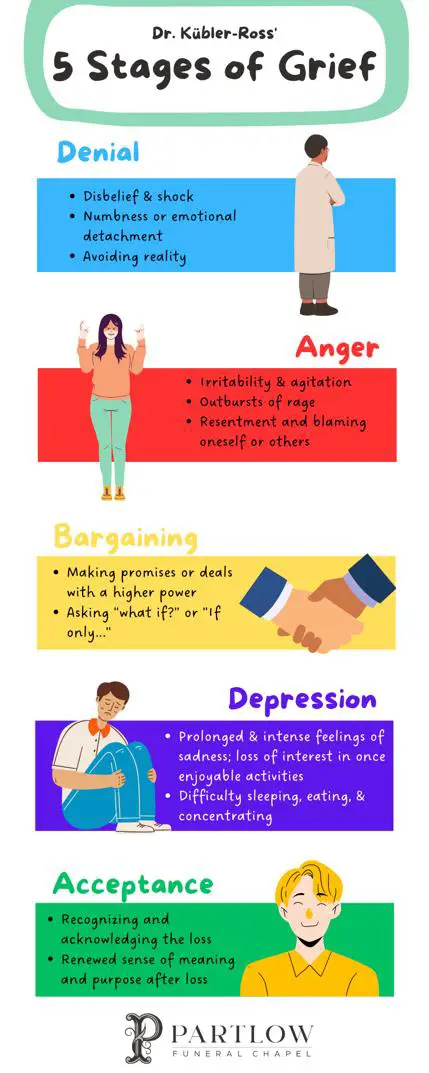
Despite the fact that our rational brain understands they're not to condemn, our emotions are intense and can conveniently bypass sensible thinking. We also might blast non-living items, complete strangers, close friends, or member of the family. We might feel upset at life itself. While we typically assume that anger is an unfavorable emotion and something to be avoided whatsoever prices, it actually serves a purpose and is an essential part of recovery.
Bargaining is a phase of sorrow that assists us keep hope throughout extreme emotional pain. It's an effort to help us reclaim control of a circumstance that has made us feel exceptionally vulnerable and defenseless. It's likewise another method to help us hold off needing to deal directly with the sadness, confusion, or hurt.

Clinical depression is typically likened to the "quiet" stage of grief, as it's not as energetic as the temper and negotiating phases. This can result in extreme feelings of despair, despair, and sadness. Signs and symptoms of anxiety can materialize themselves in various methods. We could feel unclear, hefty, tired, confused or sidetracked.
Trauma-Informed Treatment for Therapists in the San Francisco Region
Simply like the other phases of pain, anxiety is experienced in various methods. Rather, it's a natural and appropriate reaction to grief.
Rather, For example, if we're grieving the fatality of a loved one, we may be able to share our thankfulness for all the wonderful times we invested with them. Or if we're experiencing a break up, we might say something like, "This truly was the most effective point for me." In this stage, we might become much more comfortable connecting to family and friends, and we might even make new relationships as time takes place.
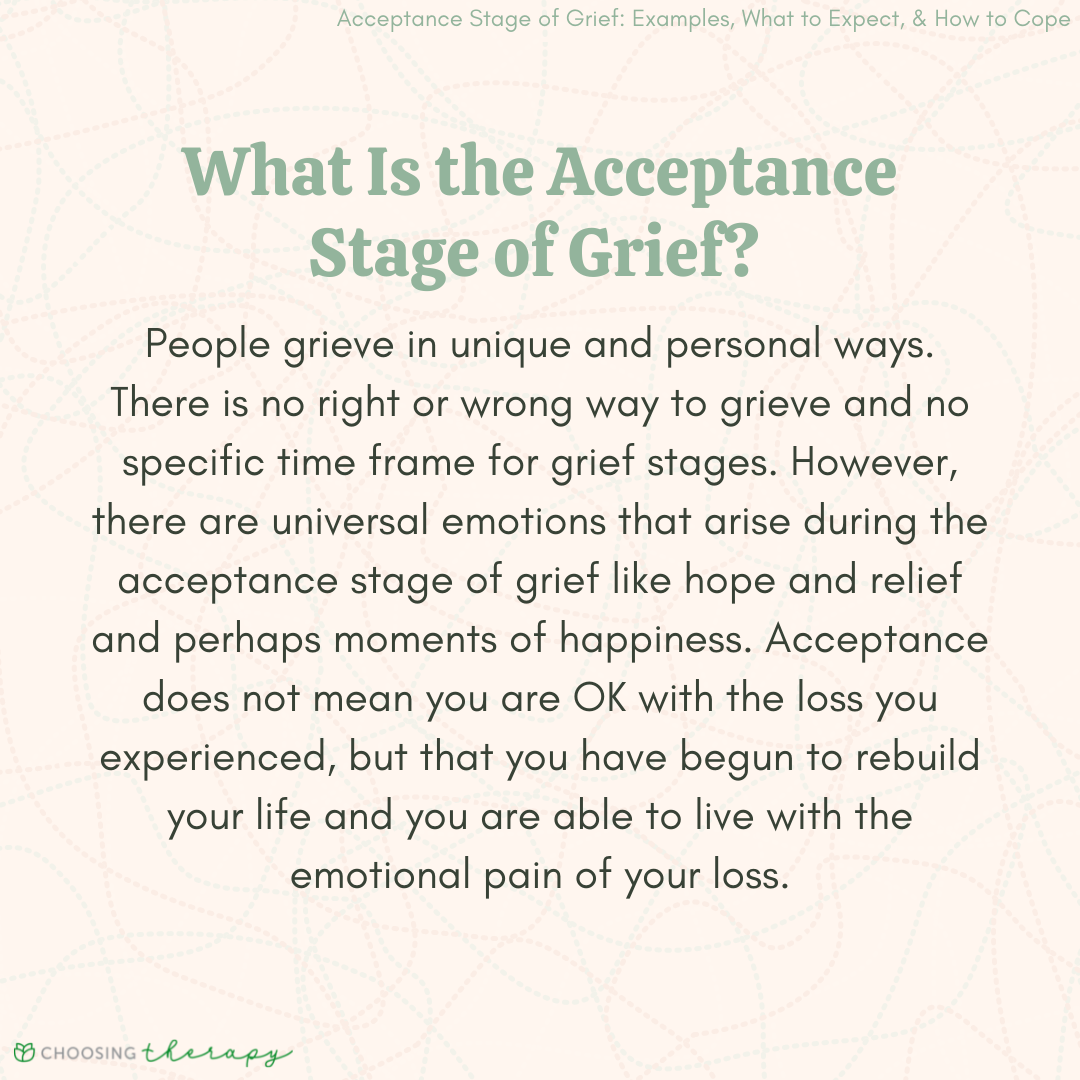
This doesn't imply we'll never have an additional hard time. Since our feelings are much more secure in this phase, we realize that we're going to be okay in the good days and the poor. Even though these five phases of grief can assist us understand the mourning procedure, Often individuals struggle due to the fact that they really feel that their mourning procedure isn't "the norm," yet pain is a highly complicated experience that varies from individual to individual.

Latest Posts
What Establishes Effective Trauma Treatment in Wheat Ridge
Why Anxiety-Driven Patterns Surface in Eating Behaviors
Benefits of Clinical Approaches for ADHD Therapy